
Why Families Stick with BJJ Long-Term
BJJ strengthens family bonds and mental resilience through shared training, visible progress, community support, and flexible family programs.
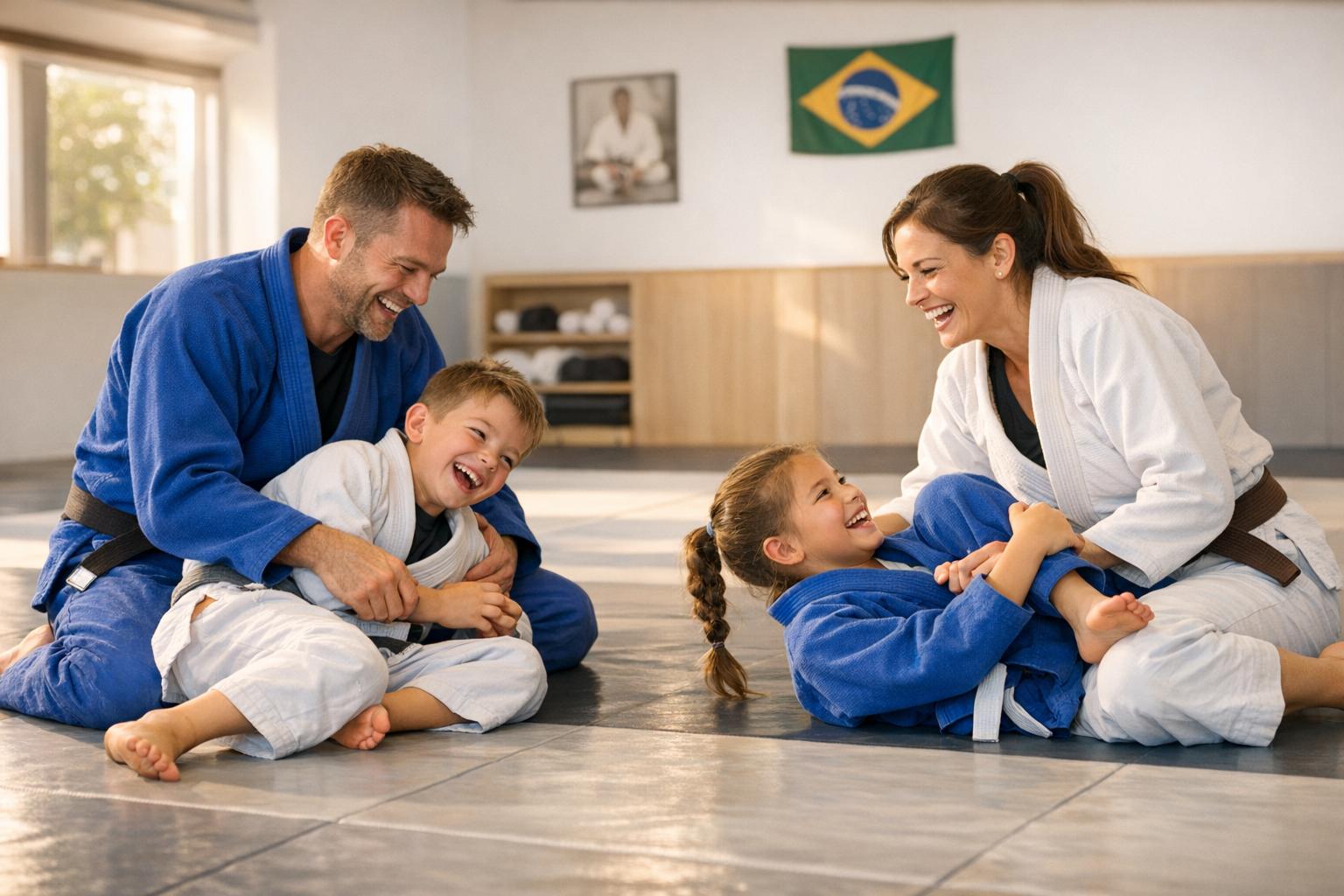
Why Families Stick with BJJ Long-Term
Brazilian Jiu-Jitsu (BJJ) is more than a martial art - it's a transformative activity for families. It strengthens bonds, nurtures mental health, and builds life skills. Here’s why families are choosing BJJ:
- Stronger Connections: Parents and kids train side-by-side, sharing goals and building trust.
- Mental & Emotional Growth: 96.9% of adults and 96.4% of kids report applying skills like resilience and confidence to daily life.
- Community Support: BJJ gyms create a welcoming environment where families feel a sense of belonging.
- Visible Progress: Structured belt systems keep everyone motivated with clear milestones.
- Health Benefits: A single session burns 400–670 calories while reducing anxiety (87.5% of adults report less stress).
BJJ’s mix of physical activity, mental focus, and community makes it a lasting choice for families. Flexible schedules and family-friendly programs ensure it fits into busy lives, helping families stay active and connected.
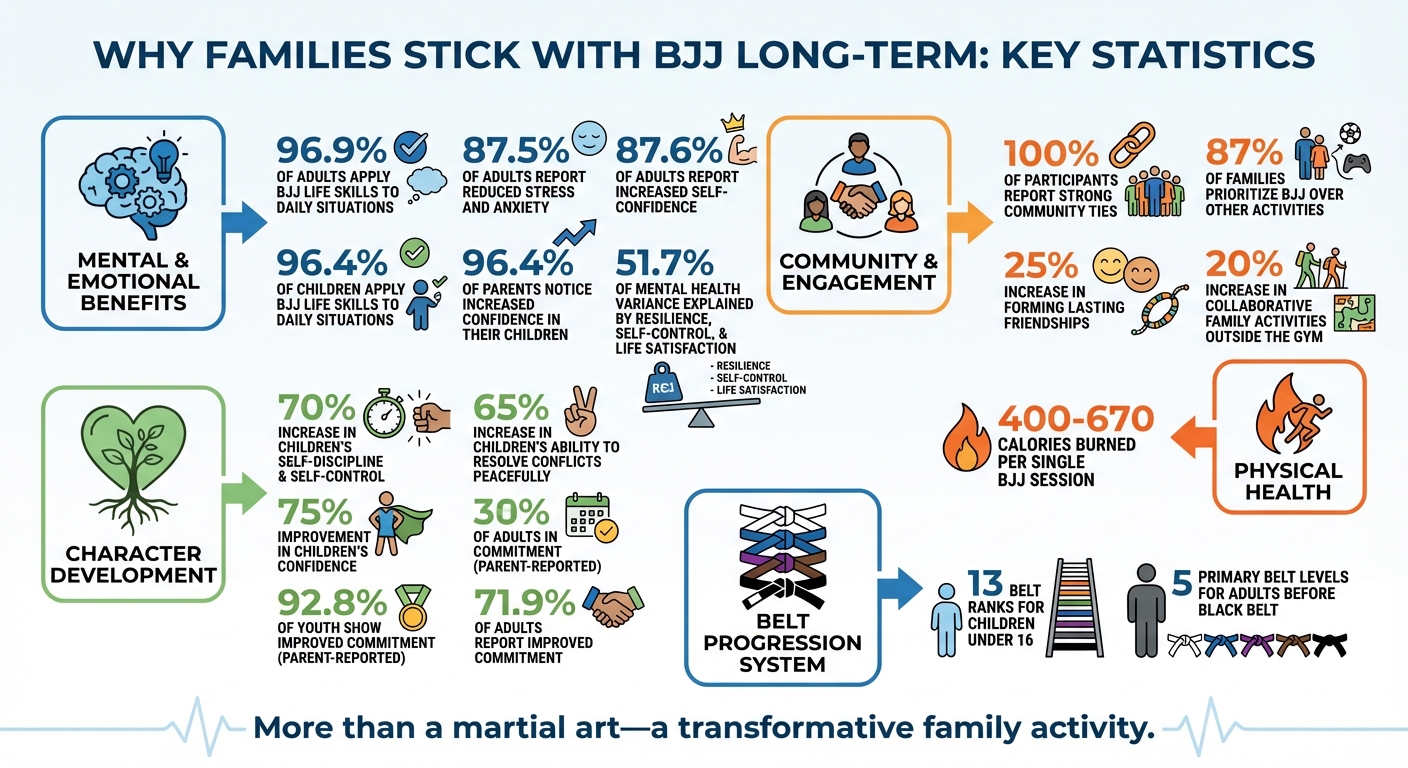
Why Families Stay Committed to Brazilian Jiu-Jitsu: Key Statistics and Benefits
The Power of Family Support in Jiu-Jitsu Training
Mental Health and Emotional Benefits for All Ages
One of the standout aspects of Brazilian jiu-jitsu (BJJ) for families lies in its ability to nurture mental and emotional well-being. Beyond physical fitness, BJJ serves as a form of somatic psychotherapy, challenging practitioners both mentally and physically. These challenges cultivate coping mechanisms that extend far beyond the mat, positively impacting daily life.
Building Resilience and Managing Stress
Training in BJJ is like a hands-on lesson in staying calm under pressure. By placing practitioners in tough, controlled situations, the sport acts as a kind of exposure therapy, helping them develop resilience and self-control. In fact, research shows that resilience, self-control, and life satisfaction account for 51.7% of the variance in mental health outcomes among male practitioners.
A fascinating study published in July 2022 by Kelly Weinberger and Tracey Burraston followed 32 participants, including veterans and first responders with no prior BJJ experience. They completed questionnaires every 20 hours of training, and the results were striking - all participants, who initially showed symptoms of PTSD, reported a notable reduction in their symptoms. The mental demands of BJJ require full focus, which helps reduce anxiety and improve concentration.
The sport’s "tap-out" rule, which allows practitioners to signal when they’ve reached their limit, teaches emotional regulation in real time. This skill naturally carries over into managing stress in daily life. Over time, practitioners gain greater mental resilience, with black belts consistently showing higher levels of mental strength compared to beginners. This steady improvement not only enhances emotional control but also builds self-confidence.
Improving Emotional Control and Self-Confidence
Confidence in BJJ isn’t just about earning a new belt - it’s about mastering skills through hard work and persistence. A 2022 study conducted at 12streetjiujitsu in Phoenix, Arizona, found that 96.4% of parents noticed an increase in their children’s confidence after starting BJJ. Among adult practitioners, 87.6% reported a similar boost in self-confidence.
"Brazilian jiu-jitsu's therapeutic characteristics are described as being the result of athletes consistently placing themselves under great psychological and physical stress, and therefore, igniting several intrinsic resources critical for developing coping skills that may lead to mental health improvements."
– Leandro de Lorenco-Lima, Department of Psychology, Liberty University
What’s learned on the mats doesn’t stay there. The discipline and focus cultivated during training often translate into improved performance at school, work, and in social interactions. In one study, 96.9% of adults and 96.4% of children reported successfully applying life skills learned through BJJ to real-world situations. Additionally, research highlights a negative correlation between training experience and aggression - more experienced practitioners tend to exhibit lower levels of verbal and physical aggression. This makes BJJ especially beneficial for children and teens, equipping them with the tools to manage emotions during crucial developmental stages. These emotional gains not only enhance individual growth but also strengthen family and community connections, keeping everyone engaged and thriving.
The Role of Community and Social Connections
Beyond the physical and mental benefits, the sense of community in BJJ gyms plays a huge part in keeping families engaged for the long haul. These gyms often feel like a "second home", offering a supportive environment where relationships go far beyond the mats. This tight-knit network not only motivates individuals but also brings families closer together during training sessions.
Creating a Sense of Belonging
A study of 185 practitioners found that those with stronger social connections in their gyms were much more likely to stick with training after seven months. This highlights how important social integration is for long-term commitment. The collaborative nature of BJJ - where partners depend on each other to practice techniques - naturally builds strong bonds. Simple rituals like bowing, high-fiving, and arm-bumping further solidify group identity and foster a sense of belonging.
"The collaborative nature of BJJ gyms fosters a sense of community, strengthening subjective norms as individuals feel social pressure to participate when surrounded by others who train."
– Dulce Ruelas, Associate Professor, Grand Canyon University
Families training together often report a 25% increase in forming lasting friendships. These connections go beyond being "gym buddies." They become a true support system where people share advice, celebrate milestones, and help each other through challenges - both inside and outside the gym.
Strengthening Family Relationships Through Shared Goals
The strong sense of community in BJJ gyms naturally extends to family relationships. Training together allows parents and kids to share goals, like working toward belt promotions, while witnessing each other's struggles and achievements. This shared journey builds trust and respect, which often carries over into everyday life. In fact, families who train together report a 20% increase in collaborative activities outside the gym, showing how the teamwork developed during training translates into other areas of family life.
BJJ gyms also create a learning environment focused on personal growth rather than competition. This mindset helps families face challenges together and stay motivated. Watching a family member grapple with a tough technique can lead to meaningful conversations about perseverance and self-improvement. These shared experiences and milestones strengthen bonds in ways that simply observing from the sidelines never could.
Skill Progression and Achievement Milestones
Brazilian Jiu-Jitsu (BJJ) stands out with its structured belt system, offering families clear, visible markers of progress - something many other sports lack. Instead of improvement feeling vague or hard to measure, BJJ provides tangible milestones like belts and stripes. These markers keep families motivated, even during the inevitable plateaus and challenges that come with any long-term pursuit.
The Importance of Visible Progress
The belt ranking system in BJJ is designed to keep both kids and adults engaged and inspired. For children under 16, there are 13 distinct belt ranks before they transition to the adult system at age 16. Adults, on the other hand, progress through five primary belt levels before reaching black belt. This difference ensures younger practitioners receive frequent encouragement, helping them stay excited about their journey.
Between major belt promotions, the stripe system offers smaller, more frequent milestones. Stripes can be awarded for consistent attendance, discipline, or technical improvement, making the often-lengthy wait for the next belt feel more achievable. Each academy has its own system, but the goal is the same: to recognize progress in a way that keeps students motivated. Each belt stage focuses on specific skill sets. For example, white belts concentrate on survival and mastering the basics, while blue belts begin exploring and experimenting with a broader range of techniques.
"The main motive in awarding the child the high-rank belt on each step is to embolden them. As children progress through the ranks and earn their updated colored belts, they'll feel a sense of accomplishment and pride in their achievements." – Elite Sports
Research supports this structured system, showing that a mastery-focused approach builds resilience during challenges. For instance, black belts report higher levels of grit, mental strength, and self-efficacy compared to beginners. This progression system encourages families to focus on skill development rather than rushing through ranks. When a student’s abilities surpass their current belt, promotion naturally follows. Combined with the mental and social benefits of BJJ, this system strengthens families' long-term commitment to the sport. Beyond just tracking progress, these milestones often lead to competitive opportunities that further deepen family involvement.
Opportunities for Competition and Personal Growth
Tournaments and training challenges provide a chance for growth that extends beyond the mat, keeping families engaged over the long term. While the belt system measures technical progress, tournaments test those skills under pressure, offering valuable lessons from both victories and setbacks. Preparing for these events and supporting one another strengthens family bonds.
The mastery-oriented mindset developed through BJJ’s ranking system also helps families stay motivated, even when competition results don’t go as planned. Practitioners who focus on refining specific techniques rather than solely chasing wins tend to handle adversity better. This emphasis on personal growth allows parents and children to celebrate technical improvements and personal milestones, creating shared memories that reinforce their passion for training.
sbb-itb-d583f1e
Life Skills and Character Development
Beyond just mastering techniques and competing, Brazilian Jiu-Jitsu (BJJ) offers valuable life lessons that reach far beyond the mats. It’s a space where families develop skills that influence their everyday lives. The structured nature of BJJ training helps build character traits that positively impact relationships at home, school, and work.
Teaching Discipline and Perseverance
The belt-ranking system and structured curriculum in BJJ naturally instill discipline. Every session challenges participants to push through discomfort and uncertainty, teaching them to stay committed even when things get tough. This hands-on experience yields real results - children practicing BJJ show a 70% increase in self-discipline and self-control.
"The discipline and efficiency developed in BJJ extend beyond the gym, enabling them to overcome challenges outside the gym." – Dulce Ruelas, Associate Professor, Grand Canyon University
BJJ connects lessons learned on the mat to real-life situations. Through the "Positive Youth Development" framework, children and adults alike learn perseverance. For example, when a child escapes a tough position during sparring, instructors help them link that effort to solving a difficult math problem or resolving a conflict with a sibling. This mindset strengthens commitment - 92.8% of youth practitioners (according to parents) and 71.9% of adults report improved commitment through BJJ training.
Long-term practitioners, especially black belts, showcase the lasting benefits of this training. Black belts demonstrate significantly higher levels of grit, resilience, and self-control compared to beginners. These qualities don’t just stay on the mat - they influence how families tackle challenges together. Parents and children alike learn to manage their focus and emotions, whether in a heated family discussion or a stressful work situation. Over time, these disciplined habits naturally lead to healthier daily routines.
Promoting Healthy Habits and Self-Control
Beyond discipline, BJJ encourages a lifestyle centered on healthy habits and self-control. Unlike lectures, BJJ teaches restraint through action. For instance, the tap-out rule - where practitioners must immediately release a submission to protect their partner - emphasizes the importance of control, even in intense moments. This principle carries over into daily life, with children’s ability to resolve conflicts peacefully increasing by 65% after starting BJJ.
"The presence of self-control supports positive behavior modes and will enable participants to manage their attention and attitudes." – Dulce Ruelas, Associate Professor, Grand Canyon University
Rituals such as bowing, high-fiving, and wearing the traditional gi reinforce respect and discipline. These small but meaningful practices create a foundation where healthy habits become second nature. Practitioners quickly realize that their performance on the mat is tied to their lifestyle choices, motivating them to prioritize better nutrition and sleep - not just for themselves but for their entire family.
Family-Friendly Programs and Scheduling
BJJ academies go beyond teaching skills and building a sense of community - they also design their programs with families in mind. These gyms understand the demands of real family life and create schedules that work for everyone. When each family member can train at their own level and at times that fit into their day, staying committed to BJJ becomes much more manageable.
Age-Appropriate Training for All Family Members
To ensure everyone gets the most out of their training, BJJ academies often divide classes by age group. This way, every family member can train with peers and develop skills at an appropriate pace. For preschoolers (ages 3–5), classes focus on building motor skills and character development. Kids (ages 5–12) dive into the fundamentals, working on coordination and self-defense techniques. Teens (ages 13–17) take it a step further, learning leadership skills and resilience, while adults (18+) focus on fitness, stress relief, and practical self-defense techniques.
Some gyms even offer women-only classes, providing moms with a supportive and empowering space to train. Additionally, "Family Martial Arts" sessions allow parents and kids to train together, creating shared goals and memories while strengthening family bonds. To make it easier on the wallet, gyms like AMP BJJ and Atos HQ provide family membership plans or discounts for households with multiple participants.
Flexible Scheduling for Busy Families
Understanding how hectic family schedules can be, many BJJ gyms offer flexible training options. Classes are available throughout the day - mornings, afternoons, and evenings - often seven days a week. Some gyms even start as early as 5:00 AM and run until 8:00 PM, ensuring there’s a time slot that works for everyone. For families with unpredictable schedules, private lessons are also an option.
Gyms don’t stop at regular classes - they also host events like "Ninja Nights", where kids can enjoy supervised fun, and summer camps that keep families connected to the gym’s culture. These offerings make it easier to stay consistent with training, even during hectic times like back-to-school season or the holidays. For families searching for a gym that fits their needs, platforms like Brazilian Jiu-Jitsu Gyms Directory provide program details and reviews to help make the decision easier. With a combination of tailored programs and flexible schedules, BJJ academies ensure families can stay active, connected, and engaged for the long haul.
Conclusion
Practicing Brazilian Jiu-Jitsu (BJJ) over the long term offers much more than just physical fitness. It provides a mental health boost, helping to shield practitioners from stress and anxiety. Beyond that, the sense of belonging within the BJJ community creates a welcoming environment - a "second home" where everyone feels included. In fact, one study revealed that 100% of participants reported strong community ties, with 87% of families prioritizing BJJ over other activities. These psychological and social benefits often fuel motivation, driven by visible progress and personal milestones.
The emotional rewards are complemented by tangible achievements, like advancing through belt ranks and developing life skills such as discipline, perseverance, and emotional regulation. For instance, children practicing BJJ show a 75% improvement in confidence and a 70% rise in self-discipline. Meanwhile, 96.9% of adults report that the skills they gain directly translate to everyday situations. Researcher Blomqvist-Mickelsson underscores this connection:
"The social interactions with like-minded individuals in the Brazilian jiu-jitsu community may serve as a protective buffer against mental health disorders and promote well-being."
These findings highlight how emotional support and structured progression are key to families sticking with BJJ for the long haul. Choosing the right gym - one with age-appropriate programs, flexible schedules, and a welcoming community - plays a critical role. Tools like the Brazilian Jiu-Jitsu Gyms Directory make it easier for families to explore programs, read reviews, and find a gym that fits their needs. When mental well-being, community connection, and skill-building come together, families truly thrive.
FAQs
How does Brazilian Jiu-Jitsu boost mental health and resilience?
Brazilian Jiu-Jitsu (BJJ) isn’t just about self-defense or competition - it’s also a powerful way to boost mental health and build resilience. Through a mix of physical activity, strategic thinking, and social interaction, BJJ helps practitioners stay composed under pressure, sharpen their focus, and embrace a mindset geared toward growth. The challenges faced during training teach valuable life skills like patience, self-discipline, and the ability to adapt, all of which naturally extend beyond the mat.
But the benefits don’t stop at personal growth. BJJ creates a tight-knit community where training partners often feel like an extended family. This sense of belonging provides emotional support and helps ease stress and feelings of isolation. Combined with the physical and mental demands of the sport, this environment fosters confidence, improves concentration, and promotes overall well-being. Families curious about these advantages can find welcoming academies across the U.S. using the Brazilian Jiu-Jitsu Gyms Directory.
Why is Brazilian Jiu-Jitsu a great activity for families?
Brazilian Jiu-Jitsu (BJJ) is a fantastic activity for families because it emphasizes technique, problem-solving, and leverage rather than relying on sheer physical strength. This makes it suitable for people of all ages and fitness levels. Whether it's kids mastering basic movements or grandparents working on their mobility, everyone can join in safely and have fun.
Training together offers more than just exercise - it’s a chance to spend quality time as a family, strengthen bonds, and celebrate shared achievements. Many families find that practicing BJJ enhances communication, builds confidence, and fosters mutual support both on and off the mat. Plus, it instills important values like discipline, respect, and perseverance, all while keeping everyone active and healthy. If you're ready to dive in, the Brazilian Jiu-Jitsu Gyms Directory is a great resource for finding family-friendly academies near you.
How do Brazilian Jiu-Jitsu gyms build a strong community for families?
Brazilian Jiu-Jitsu gyms are known for creating a warm, family-friendly environment by offering programs that bring people closer together. Many gyms go the extra mile with family-oriented classes, parent-child drills, and open-mat sessions where everyone can train side by side. These activities not only introduce families to the sport but also provide a unique way to strengthen their bonds and share a common interest.
Coaches and staff play a big role in fostering this sense of community. They take the time to learn members' names, celebrate milestones, and emphasize values like teamwork and respect. Beyond regular training, gyms often host events such as holiday parties, family sparring games, and competitions. These gatherings turn practice into quality family time and create memories that last a lifetime. If you're looking for a gym that prioritizes connection and community, the Brazilian Jiu-Jitsu Gyms Directory can help you find academies with family-focused programs.
Related articles
Share this article