
Women-Only BJJ Classes vs. Mixed Training
Women-only BJJ builds confidence in a supportive space; mixed classes test techniques against varied partners — many combine both.
Women-Only BJJ Classes vs. Mixed Training
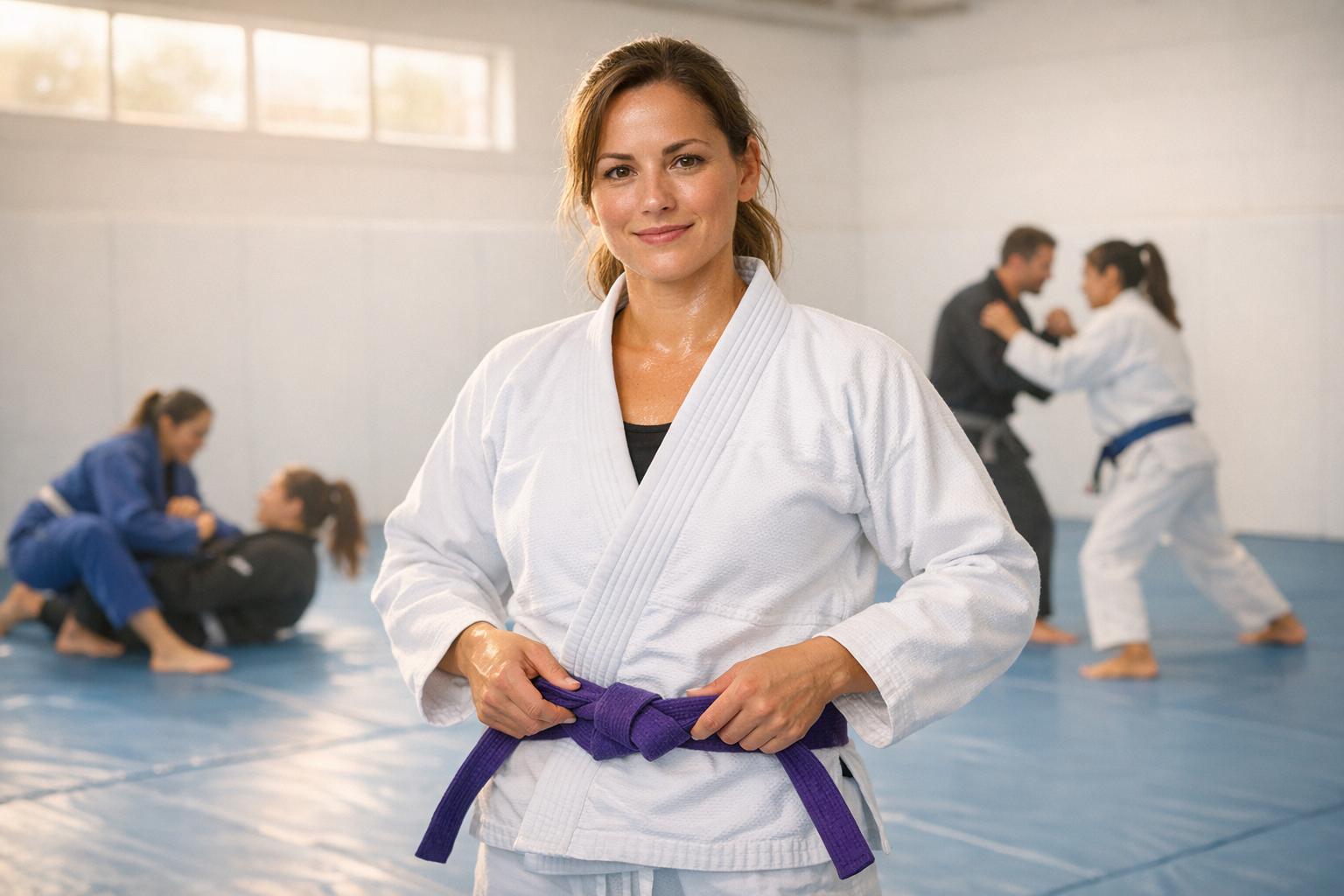
Choosing between women-only and mixed-gender Brazilian Jiu-Jitsu (BJJ) classes depends on your goals and comfort level. Women-only classes provide a supportive environment for beginners, focusing on confidence-building and mentorship. Mixed training, on the other hand, offers exposure to diverse body types and real-world scenarios, helping refine techniques against larger, stronger opponents.
Key Takeaways:
- Women-Only Classes: Great for beginners seeking a safe, welcoming space. Promotes female mentorship and camaraderie but may limit exposure to varied partners.
- Mixed Training: Builds technical skills by training with partners of all sizes and strengths. Prepares practitioners for realistic situations but can feel intimidating due to size differences and gym culture.
Quick Comparison:
| Factor | Women-Only Classes | Mixed Training |
|---|---|---|
| Comfort Level | Beginner-friendly, less intimidating | May feel overwhelming for newcomers |
| Partner Diversity | Limited variety in size/strength | Wide range of partners |
| Skill Development | Focuses on basics, smaller partners | Tests techniques against larger opponents |
| Community Building | Strong female bonds and mentorship | Expands connections across genders |
| Self-Defense Prep | Less exposure to larger attackers | Simulates realistic scenarios |
Many practitioners start with women-only classes to build confidence, then transition to mixed training for broader experience. Trial classes in both formats can help you decide what works best for your journey.
Women-Only vs Mixed BJJ Training: Complete Comparison Guide
Advantages of Women-Only BJJ Classes
Comfortable and Welcoming Training Environment
Walking into a gym filled with seasoned male practitioners can feel overwhelming for newcomers. Women-only Brazilian Jiu-Jitsu (BJJ) classes help ease this anxiety by providing a more approachable and supportive atmosphere. This allows beginners to focus on learning without the added pressure of feeling out of place. As Rockstar Martial Arts explains:
I know how intimidating it can for a girl to take her first jiu-jitsu class surrounded by a bunch of tough dudes [2].
These classes also address concerns about size differences, which can be intimidating in a mixed-gender setting. Since grappling involves close physical contact, trust between training partners is essential. Women-only classes create a safe space where trust develops more naturally, allowing students to concentrate on technique rather than discomfort. Additionally, the environment minimizes the risk of unwanted advances, ensuring participants can fully commit to their training.
By fostering a sense of security, these classes set the stage for effective learning and mentorship.
Female Mentorship and Leadership
Having female instructors and experienced practitioners in women-only classes is invaluable for beginners. These mentors provide guidance based on their own experiences, offering insights into both the physical and mental challenges of BJJ. As BJJ Fanatics highlights:
Young girls now have the opportunity to have a woman role model in the jiu jitsu world [3].
These role models not only help students refine their techniques but also inspire confidence and resilience. The structured belt progression system in BJJ gives students clear goals to strive for, and as they advance, they can step into mentorship roles themselves. This cycle of learning and teaching strengthens the community and ensures its growth for future generations [1].
Building Community Among Female Practitioners
Women-only BJJ classes create a unique sense of camaraderie. Practitioners bond over shared challenges and experiences, forming a supportive network both on and off the mat. These classes often adapt techniques to suit female body types, emphasizing natural strengths like increased shoulder flexibility [3]. This tailored approach enhances learning and provides a sense of empowerment.
Beyond the technical benefits, these classes foster a strong sense of community. As more women join BJJ, gyms become more inclusive spaces where female practitioners can connect, encourage one another, and share their journeys [1]. These relationships often grow into lasting friendships, built on mutual respect and shared goals, creating a tightly-knit network that extends far beyond the gym walls.
sbb-itb-d583f1e
WOMEN WHO ROLL: Jiu Jitsu Workshop for All Levels [Empowering Women in Jiu Jitsu]
Drawbacks of Women-Only BJJ Classes
While women-only Brazilian Jiu-Jitsu (BJJ) classes offer certain advantages, they also come with their own set of challenges.
Fewer Training Partners Available
One common issue with women-only classes is the smaller pool of training partners. This can limit exposure to a variety of body types, weights, and skill levels - factors that are crucial for developing a well-rounded grappling game. Repeatedly training with the same partners might restrict the range of techniques you encounter, potentially slowing technical growth.
Potential Skill Development Limitations
Training exclusively with partners of similar size and strength can sometimes hinder technical progress. As BJJ Fanatics explains:
If you are the smaller of the two competitors and have a higher skillset, or more precise technique application, then yes you are at an even playing field even though the other person is ahead of you in strength [3].
However, without facing opponents with a significant strength advantage, practitioners may rely more on their physical attributes than on refining techniques. This can be a missed opportunity to develop the precision and calmness needed to handle larger, stronger opponents. BJJ Fanatics also notes:
Becoming used to having someone that is stronger trying to submit you will help you keep as calm as possible and develop muscle memory on techniques that work against them [3].
Without these experiences, women-only classes may fall short in preparing practitioners for real-world self-defense situations where strength disparities are common.
Additional Program Costs
Another drawback is the potential for extra expenses. Women-only classes are often offered as specialized programs, which may require separate registration or additional fees beyond the standard gym membership. These added costs could make the program less accessible for some practitioners.
These challenges underscore why some individuals choose mixed training environments to gain exposure to a broader range of opponents and scenarios.
Advantages of Mixed Training Environments
Mixed training environments bring a range of benefits to practitioners. Training alongside people of all genders introduces you to a wider variety of physical attributes, technical styles, and learning opportunities, all of which can help you grow as a martial artist. These diverse experiences are particularly valuable when comparing the advantages of mixed training to those of women-only classes.
Training with Different Body Types and Skill Levels
Mixed classes provide the chance to work with partners of different sizes, strengths, and physical abilities - key factors in developing versatile grappling skills. This setup forces practitioners to rely on technique rather than just physical strength. For example, smaller athletes often focus on precision and timing, while stronger individuals learn to refine their technique instead of simply overpowering opponents [2][3].
Additionally, physical differences between genders, such as women having greater shoulder flexibility due to distinct musculature and bone structure, add another layer of complexity to training [3]. Adapting to these differences sharpens submission techniques and enhances overall adaptability.
Broader Technical Experience
Training with a diverse group of partners exposes you to a wide range of styles and techniques that might not be present in a more uniform group. This variety helps practitioners improve faster by challenging them to adapt to different approaches - whether it’s leveraging flexibility, countering strength, or perfecting precision-based moves [3].
For instance, men can gain insights into precision-focused techniques, while women learn strategies to counter strength advantages. These skills are not only valuable on the mats but also translate directly to self-defense situations. This type of training also helps develop "grappling senses", which are the muscle memory and intuition that come from working with partners of varying attributes [3].
Expanded Social Connections
The benefits of mixed training extend beyond technical growth. Co-ed classes create opportunities to form connections with a diverse group of training partners. As Rockstar Martial Arts puts it:
On the mats, everyone is equal; there is no gender, just training partners [2].
This perspective fosters mutual respect and camaraderie, while the communication and social skills developed in these settings can boost confidence both on and off the mats.
Drawbacks of Mixed Training Environments
Mixed training environments bring diversity to the mat but also present challenges, particularly for women.
Size and Strength Differences
One major hurdle in mixed training is the physical disparity between men and women. Men often rely on their natural strength to power through techniques, sometimes bypassing the need for precision. Women, on the other hand, are forced to refine their technical skills because they can't depend on brute strength to correct mistakes. This size imbalance can make training frustrating, as larger partners may dominate positions, leaving women fewer chances to practice escapes effectively. Compounding the issue is the low percentage of female practitioners - less than 25% of the Brazilian Jiu-Jitsu (BJJ) community - making it tough for women to find partners of similar size and skill level [4]. These mismatches can also lead to uncomfortable close-contact scenarios during training.
Physical Discomfort in Close-Contact Situations
Close-contact drills can sometimes create awkward or distressing situations for women, especially when male partners let ego take over. Some men may escalate their intensity after being submitted by a woman, as noted by Sirena Allen-De Guzman:
There are certain men who struggle with the concept of being tapped out by a woman [5].
A striking example of this occurred in April 2026, when fitness influencer Riley Rehl shared an incident during her 30-day BJJ challenge. She described being overpowered by a 14-year-old male student, an experience that visibly shook her [5]. Allen-De Guzman also highlighted a lack of conversations about boundaries in gyms:
We don't talk about gym etiquette in that way in any gym that I've ever been in. There's never been a conversation about 'hey guys, if somebody says no, that means no' [5].
This lack of clear guidelines can pressure women into training with partners who make them feel uneasy, adding another layer of difficulty to their experience. Beyond the physical challenges, the gender imbalance influences the social culture of the gym as well.
Low Female Participation Rates
The male-dominated atmosphere in many gyms can feel intimidating, especially for newcomers. This dynamic often discourages women from finding a suitable BJJ gym or staying in the sport. The lack of female role models in the gym further exacerbates this issue, making it harder for women - particularly beginners - to see a path to success in a space that feels overwhelmingly male [2][4]. It’s worth noting that female competitors have only been featured on the sport’s biggest stages for the past 25 to 30 years, which highlights the relatively recent visibility of women in BJJ [4]. This limited representation can make the journey feel isolating and unwelcoming for women who are just starting out.
Women-Only Classes vs. Mixed Training: Side-by-Side Comparison
Choosing between women-only classes and mixed training depends on your goals and comfort level. Mixed training sharpens technical skills by teaching you to rely on leverage and positioning rather than strength, especially when working with larger partners. This environment encourages adaptability, helping smaller practitioners develop effective techniques to handle size and strength differences.
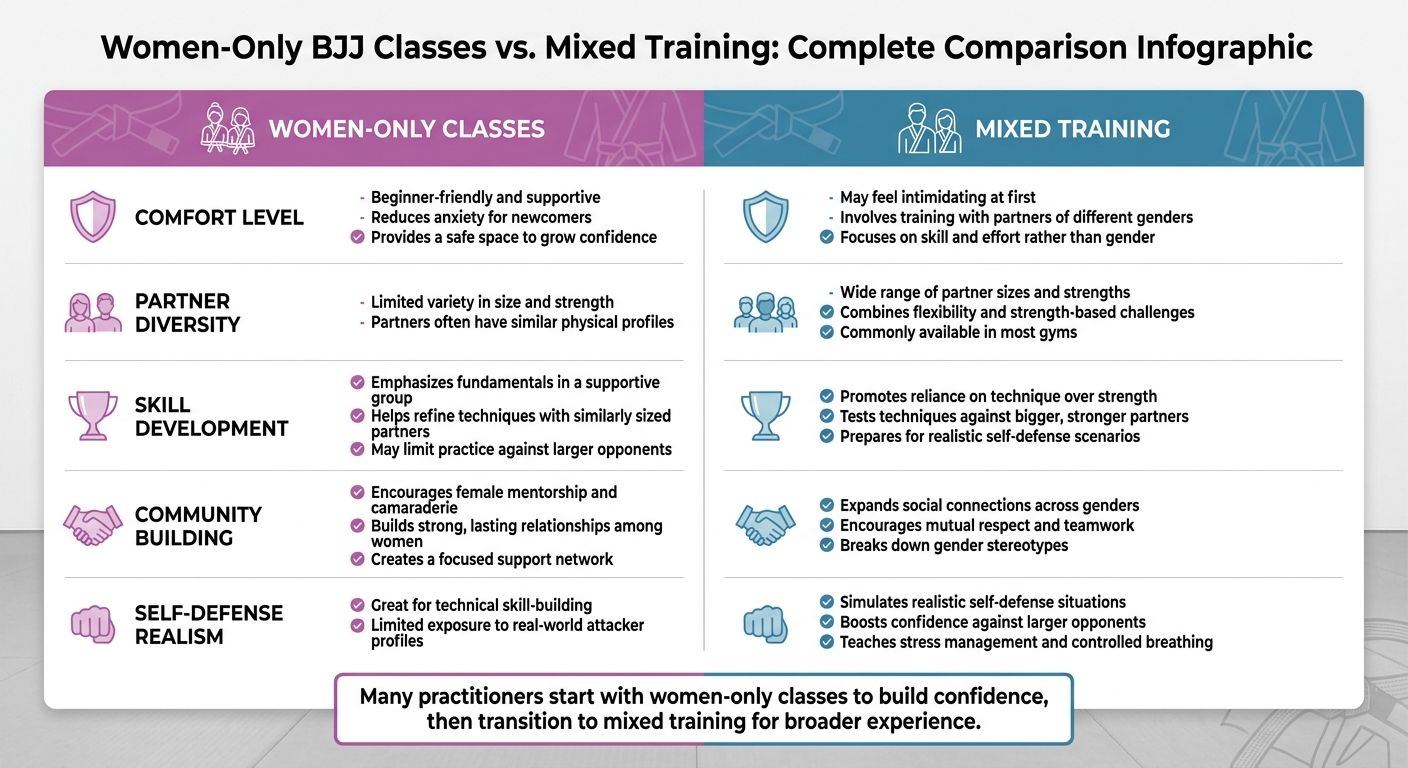
On the other hand, women-only classes provide a welcoming and supportive space, ideal for beginners. These sessions focus on building confidence, mastering the basics, and creating a sense of community without the pressure of training with larger or more aggressive partners. However, they may lack the variety of partners and exposure to the physical disparities often encountered in self-defense situations. To highlight these differences, here's a detailed comparison:
Comparison Table
| Factor | Women-Only Classes | Mixed Training |
|---|---|---|
| Comfort Level | • Beginner-friendly and supportive • Reduces anxiety for newcomers • Provides a safe space to grow confidence |
• May feel intimidating at first • Involves training with partners of different genders • Focuses on skill and effort rather than gender |
| Partner Diversity | • Limited variety in size and strength • Partners often have similar physical profiles |
• Wide range of partner sizes and strengths • Combines flexibility and strength-based challenges • Commonly available in most gyms |
| Skill Development | • Emphasizes fundamentals in a supportive group • Helps refine techniques with similarly sized partners • May limit practice against larger opponents |
• Promotes reliance on technique over strength • Tests techniques against bigger, stronger partners • Prepares for realistic self-defense scenarios |
| Community Building | • Encourages female mentorship and camaraderie • Builds strong, lasting relationships among women • Creates a focused support network |
• Expands social connections across genders • Encourages mutual respect and teamwork • Breaks down gender stereotypes |
| Self-Defense Realism | • Great for technical skill-building • Limited exposure to real-world attacker profiles |
• Simulates realistic self-defense situations • Boosts confidence against larger opponents • Teaches stress management and controlled breathing |
Many women find success by blending both formats - starting with women-only classes to build a solid foundation and gradually transitioning to mixed training for a more diverse and challenging experience.
Finding BJJ Academies with Brazilian Jiu-Jitsu Gyms Directory

Once you’ve decided on the type of training environment that suits you best, the next step is finding the right academy. This can feel overwhelming, but the Brazilian Jiu-Jitsu Gyms Directory makes the process much simpler by connecting you with academies across the United States. The directory provides detailed listings that include contact information, program options, and instructor qualifications, helping you find places that offer both women-only and mixed classes.
The platform’s location-based search feature allows you to filter academies near you, whether you’re in Prosper, Frisco, McKinney, or other areas. For women who may feel uneasy starting out in male-dominated spaces, the directory highlights academies offering specific "Women's Beginner BJJ" classes. For instance, Rockstar Martial Arts showcases its beginner programs for women, led by female coaches like Coach Maddie, who fosters a welcoming and supportive environment for newcomers [2].
Each listing also provides insights into an academy’s training philosophy. You can see whether they emphasize a mixed environment where effort and skill are valued over gender or if they focus on creating a more tailored space for women through mentorship and confidence-building. This transparency helps you decide if an academy aligns with your personal goals, whether you’re prioritizing technical growth or a more nurturing atmosphere.
User reviews are another valuable feature. They offer firsthand accounts from female practitioners, shedding light on how women are treated in mixed settings and whether gender equality is genuinely practiced. This feedback can save you time by helping you narrow down your options without needing to visit multiple gyms [2].
The Brazilian Jiu-Jitsu Gyms Directory is free to use for both practitioners and gym owners. It provides unlimited access to detailed listings, interactive maps, and program information. Whether you’re just starting out or looking to switch to a new training environment, this tool simplifies the search for an academy that aligns with your preferences and supports your BJJ journey.
Conclusion: Selecting the Right Training Format
Deciding between women-only classes and mixed training isn't about one being better than the other - it’s about what suits you. If your goal is self-defense and learning to handle larger, stronger opponents, mixed training can provide the practical experience you need. As BJJ Fanatics puts it:
Becoming used to having someone that is stronger trying to submit you will help you keep as calm as possible and develop muscle memory on techniques that work against them [3].
However, if you're new to Brazilian Jiu-Jitsu and feel uneasy in male-dominated spaces, women-only classes can offer a welcoming environment to build confidence and sharpen your skills. Many people start here and transition to mixed training as they grow more comfortable and experienced.
Your priorities - whether it's refining your technique, finding a sense of community, preparing for competition, or simply feeling at ease - should guide your decision. Both formats have their strengths, and what works for you now might change as you progress. The Brazilian Jiu-Jitsu Gyms Directory can make this search easier by helping you find academies that offer both options. With detailed program descriptions, instructor qualifications, and user reviews, you can explore training environments across the United States without the hassle of visiting multiple locations.
If you’re unsure, try out trial classes in both formats. Experiencing them firsthand will help you figure out what fits your needs best. After all, your growth in BJJ is a personal journey, and there's no one-size-fits-all solution.
FAQs
Should I start with women-only classes or mixed classes?
Choosing between women-only and mixed Brazilian Jiu-Jitsu (BJJ) classes comes down to your personal comfort and what you’re hoping to achieve. Women-only classes create a welcoming environment where you can build confidence, refine techniques, and train alongside partners with similar body types. On the other hand, mixed classes give you the chance to work with a variety of training partners, which can better prepare you for practical, real-life situations. If you’re just starting out, women-only classes can be a great way to ease into the sport, while mixed classes might be an excellent next step as you gain experience and confidence.
How do I stay safe and set boundaries in mixed training?
To ensure safety during mixed training, it's essential to communicate openly about your comfort levels and boundaries with both your training partners and instructors. Before starting, take the time to clearly establish what you're okay with to avoid any confusion. Always listen to your body - if something feels off, uncomfortable, or painful, don't hesitate to stop. Speak up if you need adjustments or a break during the drill. Prioritizing clear communication and setting boundaries creates a respectful and secure space for everyone involved.
Can I combine women-only and mixed training each week?
Yes, blending women-only and mixed training sessions each week offers a well-rounded approach to Brazilian Jiu-Jitsu. Women-only classes create a welcoming environment where beginners can build confidence and refine their skills without added pressure. On the other hand, mixed training exposes you to a variety of training partners, helping you develop adaptability and enhance your technique. Combining these two formats allows you to enjoy the supportive atmosphere of women-only classes while gaining valuable experience in mixed settings, promoting steady and balanced growth in BJJ.
Related articles
Share this article